A Quiet Walk Around a Ground Before Kick-Off
A quiet walk around a football ground reveals how entrances, signs, and gathering spaces shape matchday, helping you find your way before taking a seat.
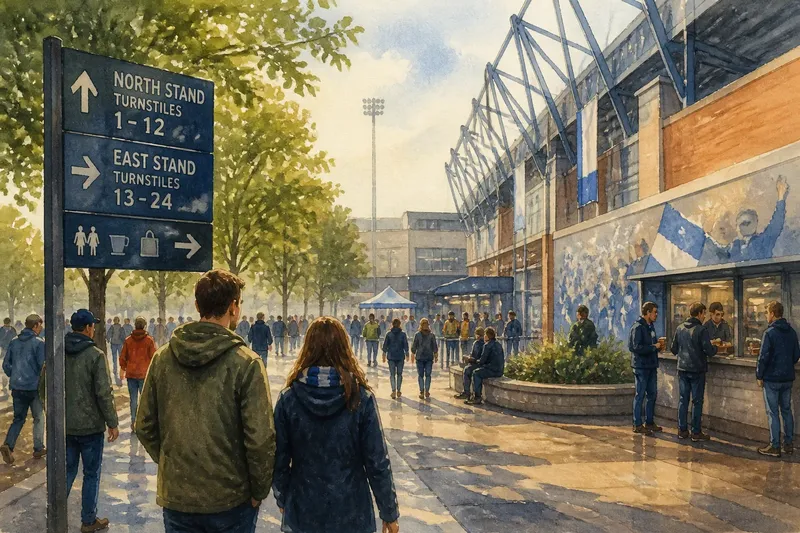
A quiet walk around a football ground can begin at the first turnstile, before the noise of the match gathers. Notice which entrance people choose, where the signs point, and how paths widen near the stands. A short circuit can turn the approach to your seat into a chance to read how the ground guides its visitors.
You do not need to study every detail or delay anyone in your group. Follow the main route, make a slower loop through public gathering spaces, or stay close to your entrance and watch how people find their way. Each option offers a different view of the matchday setting.
What can you learn from the main entrance route?
Follow the route most visitors are likely to take from the nearest public approach to their turnstile. Look for a sequence: an entrance sign, a barrier or security point, a ticket check, then directions toward a stand or block. This order can make the ground easier to read before you need to choose a direction in a crowd.
Notice where instructions appear. A sign before a fork can help people choose a side; the same message after the fork may arrive too late. Large labels often identify stands or gates, while smaller notices may explain a specific restriction or local arrangement.
Watch what happens when a route narrows. A queue may form beside a wall, around a temporary barrier, or near a checkpoint, and those surroundings affect how comfortably people can pause and read. This is not a judgment on the ground; it is a way to see how movement and information meet.
Imagine you are meeting a friend who has never visited the stadium. You walk from the station-side approach and see two signs naming different stands, but only one includes the turnstile range. You would tell your friend to match the stand name on their ticket before choosing a queue, rather than simply following the larger crowd.
This route suits a first visit, a tight schedule, or anyone who wants to get settled without a detour. Keep your ticket details handy and follow the ground’s instructions. If access or permitted routes depend on venue guidance or local rules, follow that guidance.
Start with the sign that appears before the first meaningful choice of direction.
What changes when you take a slower loop?
If time allows and the public areas invite it, a gentle loop can show how the ground gives people places to gather before entering. You might pass an open forecourt, a food stand, a club shop, or a broad walkway beside the stadium. Their arrangement can make the approach feel like either a corridor to the turnstile or a shared place to pause.
Pay attention to how people use each space rather than guessing its intended purpose. Some visitors stop to meet friends; others keep moving with a drink or scarf in hand. A clear edge between a queue and a walking path can make both activities easier to understand, while a busy junction may leave people unsure where to stand.
Gathering spaces also affect how signs are noticed. A board beside an open area may be visible from a distance, while a poster tucked behind a kiosk may only be legible up close. A distinctive corner, mural, or stand entrance can serve as a useful meeting point because it is easier to describe than a vague stretch of pavement.
This approach suits a return visitor who wants to notice the ground’s public character, or a companion who enjoys taking in the surroundings. It is less suitable if your group needs a quick arrival or the public path is crowded. Stay in areas open to visitors and leave queues and access routes clear.
Instead of simply noticing that people have gathered, ask what makes a place a natural stopping point: shelter, a view of the entrance, nearby food, or room to stand without blocking others.
Which approach fits your matchday?
Choose among these options according to your time, attention, and arrival needs:
- Direct route: Go from your approach to the correct entrance with minimal detours. Choose it if you are new to the ground, arriving close to kick-off, or helping someone who wants a straightforward path.
- Public-space loop: Take a short circuit past open gathering areas, then return to your entrance. Choose it if you have time and want to notice how the ground accommodates meeting, waiting, and movement.
- Entrance-side pause: Stay near your turnstile and observe the signs, queue shape, and nearby paths without crossing the site. Choose it if you want a quiet look but need to remain close to your group or seat.
Ask yourself whether you need to arrive efficiently or have room to look around. If you are unsure, take the direct route first. You can pause at a broad public space on the way, then continue instead of setting out on a loop you may not have time to finish.
Say you arrive with a friend who has a ticket for a different stand. You follow the direct route to your entrance, identify the stand labels, and agree on a public meeting point visible from both approaches. The result is a clear plan for separating and rejoining without either person needing to search inside the ground.
How do signs and meeting places shape the visit?
Signs do more than point toward seats. They can sort people by stand, gate, ticket type, or other directions, giving visitors a sequence of choices as they approach. Notice where a message is repeated and whether its wording matches the names on tickets.
A useful sign answers a question at the moment it arises. Before a junction, it can direct visitors toward the right side; near an entrance, it can confirm they have reached the correct place. A sign that is easy to see but hard to understand may still leave people uncertain.
Meeting places work best when a group can describe them simply and stand there without interrupting the flow. “By the main gate” may be too broad if several entrances look alike. A distinctive shopfront, a particular corner of an open forecourt, or a named stand entrance can offer a clearer reference, as long as the spot remains accessible and does not obstruct people.
Notice how arrival information is spread across the space. A ticket may name a stand while a separate board points to gates, so visitors have to connect those labels. When someone stops to check a phone or ticket, look for a nearby clue that might help them continue. That observation can make the ground easier to describe to a first-time companion.
What should you look for on a quiet walk around a ground?
How do I find the right entrance?
Match the stand or gate information on your ticket with the signs before choosing a queue. If the labels are unclear, ask a steward rather than assuming the largest crowd is headed to your entrance.
Where is a good place to meet someone?
Choose a public spot that is easy to describe, visible from the routes you will use, and out of the way of queues. Agree on the exact side of a landmark so neither person has to search around it.
Should I walk around the whole stadium?
Only if public access, time, and the crowd make a loop comfortable. A short pause near your entrance can reveal plenty about signs and movement without turning arrival into a long detour.
What should I notice besides the signs?
Look at where paths widen, where people pause, and whether queues leave room for others to pass. These details show how the surroundings support movement as well as how information is presented.
How can you observe without getting in the way?
Keep your walk simple. Step aside before reading a notice, avoid stopping in a queue, and do not treat a staff-only route or closed space as part of the circuit. If you are with others, agree on a meeting point before anyone wanders off.
You can make the walk more interesting by choosing one question to follow. Perhaps you want to see how visitors distinguish one entrance from another, or where people naturally gather while waiting. One question keeps your attention focused without making the experience feel like an inspection.
When you reach your seat, carry one practical observation with you: which route felt clearest, which landmark was easiest to identify, or where a companion might wait. For a quiet walk around a football ground, that small detail can help you arrive calmly and make the next visit easier to picture.